The rest of the country sweats through summer. The East Valley bakes through it.
When Gilbert and Chandler hit 115°F in late July and August — and they will — the heat isn't just uncomfortable for the people inside your home. It's actively working on the structure, the systems, and the materials that hold the building together. Day after day of extreme temperatures creates a slow, cumulative kind of damage that doesn't announce itself the way a monsoon roof leak does. It just quietly reduces the lifespan of major systems, creates efficiency losses that show up on your utility bill, and occasionally produces failures that are genuinely expensive to fix.
Here's what 115°F Arizona heat actually does to your home — and what Gilbert and East Valley homeowners should pay attention to.
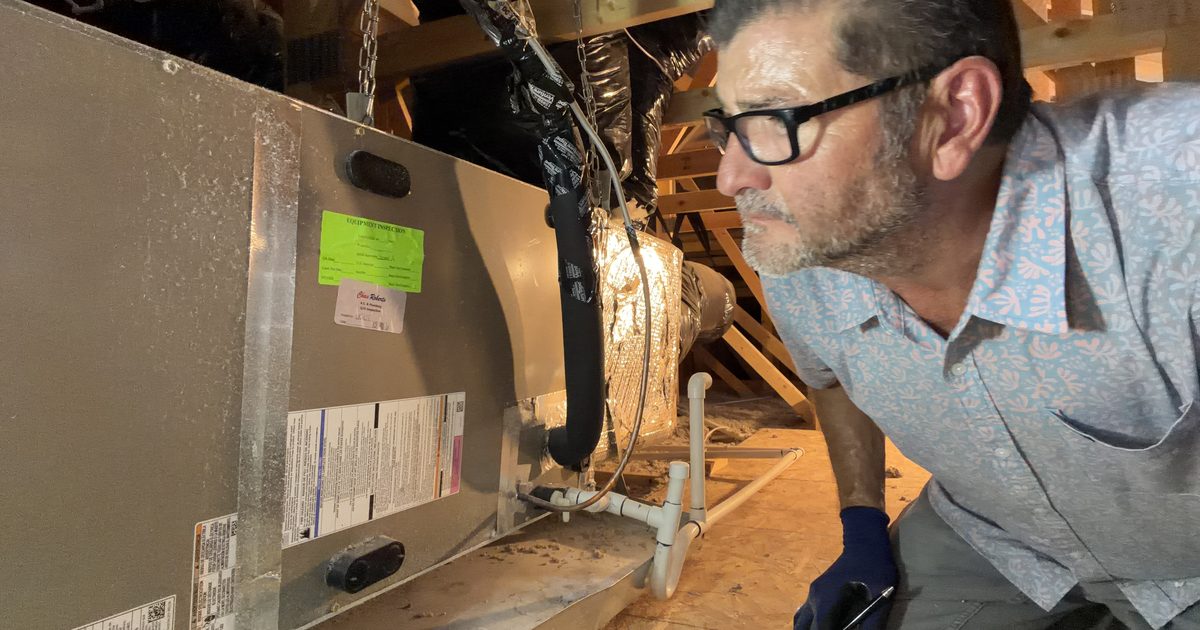
What Extreme Heat Does To Your AC System
The specific failure points that show up most frequently in Gilbert and Chandler homes during extreme heat:
Refrigerant loss becomes critical faster. A refrigerant leak that's merely inconvenient in a mild climate becomes a total system failure in August in Arizona. A unit that's running low on refrigerant can't transfer heat effectively, the compressor runs hot, and in extreme cases the compressor can fail entirely — an $1,800 to $3,500+ repair. Any AC unit that's struggling to maintain setpoint temperature during a 115°F day warrants a refrigerant check immediately.
Capacitors fail in extreme heat. This is the most common East Valley AC repair call during peak summer. The start capacitor and run capacitor help the motor start and maintain speed — and heat degrades them. A capacitor is a $150–$300 repair, but if a failed capacitor lets the motor struggle and overheat, you're looking at a much larger repair.
Condenser coils get dirty fast. The outdoor condenser unit in a Gilbert or Chandler backyard is surrounded by monsoon dust, cottonwood fluff, and desert debris for months. A dirty condenser coil can't release heat effectively, which forces the compressor to work harder in conditions where it's already stressed.
Ductwork efficiency matters more at extremes. Ducts running through a 150°F+ attic space need to be well-insulated and properly sealed. A duct that's losing 20% of its conditioned air to attic heat is the difference between hitting setpoint and not hitting setpoint at all in August.
What Extreme Heat Does To Your Attic
An unventilated or poorly ventilated attic in an East Valley home during August can reach 150°F to 170°F. That number has real consequences:
Roof deck degradation. OSB and plywood roof decking experience repeated thermal expansion and contraction. Over time, this contributes to delamination, warping, and fastener backing — conditions that compromise the structural integrity of the roof deck.
Radiant heat load into living space. An overheated attic transfers radiant heat down through the insulation into living spaces. This is why two East Valley homes on the same street can have dramatically different cooling costs — attic insulation levels, ventilation quality, and radiant barrier decking make a significant difference.
Insulation compression. Batt insulation repeatedly subjected to extreme heat loses R-value over time. An attic installed at R-30 fifteen years ago may be performing more like R-22 today.
What Extreme Heat Does To Windows And Doors
Dual-pane windows rely on an airtight seal to maintain their insulating argon or krypton gas fill. When seals fail — from thermal cycling, age, or UV degradation — you get the fogging or film that appears between the panes. A failed seal eliminates the insulating value of the dual-pane unit entirely. In an East Valley summer, a failed window seal is a direct hit to cooling efficiency on the hottest exposures.
What Extreme Heat Does To Your Foundation And Concrete
The metro's expansive clay soil shrinks and pulls away from foundations during extended dry periods between monsoon events. Homes on expansive soil in the Gilbert and Chandler areas can experience differential settlement, and the cracks that result in drywall, stucco, or at interior floor/wall transitions are sometimes the first visible signs of foundation movement.
What Should East Valley Homeowners Do About It?
Most heat damage is cumulative and quiet — it shows up as an aging AC, a thinning attic, a fogged window or a hairline crack long before it shows up as a failure. A maintenance inspection from Leading Edge Plus Inspections documents where your home stands after another East Valley summer, so you can plan repairs on your schedule instead of the heat's. Kelly Lopez inspects personally throughout Gilbert, Chandler, Mesa, Tempe, and Queen Creek — call (602) 581-5678 to schedule.