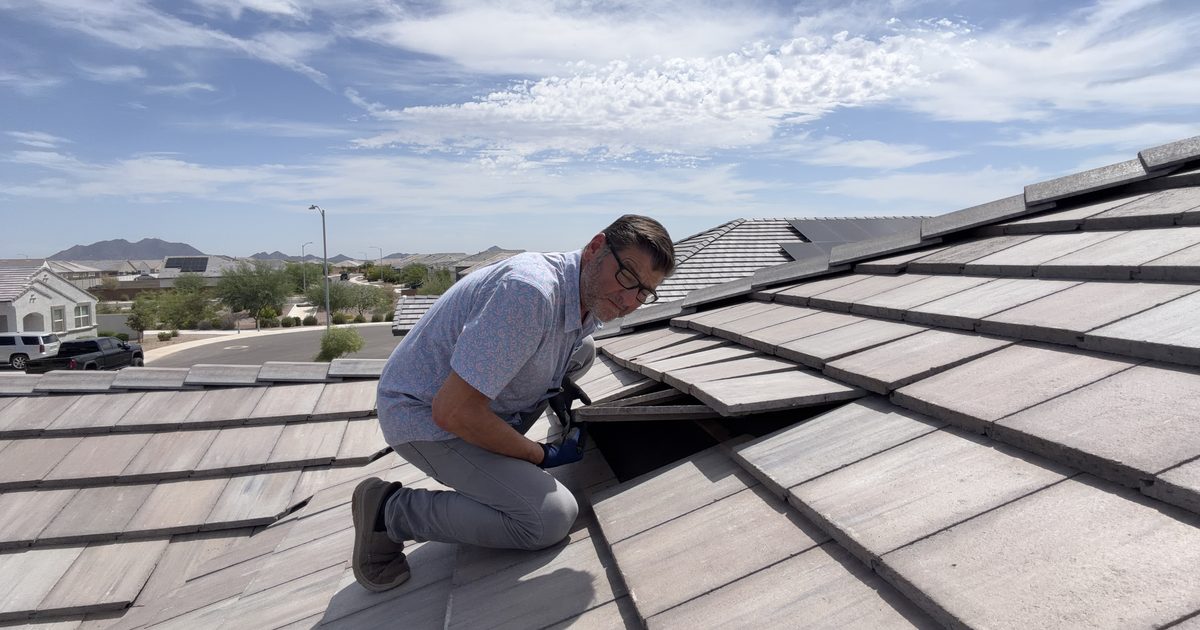
Did Monsoon Season Damage Your Roof? Here’s What Every Gilbert Homeowner Should Check Right Now
Every July, it happens. The sky turns amber, the wind kicks up a wall of dust, and Gilbert disappears behind a haboob rolling in from the southeast. Then come the rain bands — sudden, violent, 2 inches in 45 minutes over neighborhoods that got zero rain the day before. By the time the storm clears and the pavement stops steaming, most homeowners are relieved nothing looked obviously wrong.
But “nothing looks wrong from the driveway” and “your roof is actually fine” are two very different things in the East Valley.
Arizona’s monsoon season — roughly June 15 through September 30 — delivers a combination of wind, debris impact, ponding water, and rapid thermal cycling that puts roofs through more stress in 90 days than most climates see in three years. Gilbert, Chandler, Mesa, and the surrounding East Valley sit right in the monsoon corridor, and the damage patterns here are specific, predictable, and routinely missed by homeowners until they show up as water stains on a ceiling or rot behind stucco.
Here’s what to actually check — and what to watch for.
What Does A Haboob Actually Do To A Roof?
A haboob isn’t just dramatic scenery. It’s a wall of wind-driven debris moving at 30 to 60 miles per hour, carrying sand, gravel, plant material, and sometimes larger objects across the East Valley. That debris impacts shingles, tile underlayment, flat roof membranes, and flashing.
The most common haboob-related roof damage in the Gilbert area:
- Granule loss on shingles. Wind-driven sand acts like sandpaper across asphalt shingles. You won’t see this from the ground, but after a season of haboobs, a shingle that was rated for 20 more years can be significantly degraded. Look for granule accumulation in gutters and at downspout exits.
- Lifted or cracked tile. Concrete and clay tile roofs — extremely common in East Valley new construction from the 1990s through today — can have individual tiles shifted, cracked at the edges, or have their adhesive set points compromised by repeated high-wind events. A tile doesn’t have to be visibly broken to allow water underneath.
- Flashing displacement. The metal flashing around chimneys, skylights, HVAC penetrations, and parapet walls gets stressed by wind. Even small gaps or lifted edges create pathways for the monsoon rain that follows every haboob.
What Does Monsoon Rain Do That Normal Rain Doesn’t?
Gilbert averages about 8 inches of annual rainfall — but roughly half of it falls in roughly 8 weeks. That intensity matters. A slow, steady rain gives water time to drain. A monsoon downpour overwhelms drainage systems, fills low spots instantly, and drives water horizontally under flashing and through any gap the haboob left behind.
Flat roof ponding is a critical issue for Gilbert and Chandler homeowners, particularly in homes built in the 1980s and 1990s with flat or very low-slope sections over garages, covered patios, or room additions. Standing water on a flat roof after a monsoon adds structural load, degrades roofing membrane, and accelerates the failure of seams and flashings.
Stucco cracks are another East Valley-specific concern. Hairline cracks in stucco are normal and cosmetic. But any crack at a window corner, a wall-to-roof transition, or along a parapet wall cap is a direct pathway for monsoon-driven water. Once water gets behind stucco, it starts rotting the wood sheathing underneath. By the time you see a bubble or a soft spot in interior drywall, the structural damage is often already significant.
What Should You Actually Look At After A Monsoon?
Post-storm checklist for East Valley homeowners:
- Walk the perimeter of your home after the next significant storm. Look at the base of exterior walls for any water-dark staining that’s unusually high, or any area where runoff seems to be concentrating against the foundation.
- Check your gutters and downspouts. Monsoon storms carry debris. Clogged gutters during a rain event mean water is pooling against your fascia.
- Look at your fascia boards. Wood fascia that gets repeatedly wetted and dried during monsoon season shows soft spots, paint bubbling, and eventual rot — a direct pathway for water intrusion at the roof edge.
- Check your ceiling in the weeks after major storms. Water stains or discoloration in ceilings — especially near exterior walls, skylights, or ceiling fixtures — are lagging indicators of roof intrusion.
- Don’t ignore your attic. The most important inspection after monsoon season in Arizona isn’t the roof surface — it’s the attic. Moisture intrusion at the roof deck, daylight visible at ridge vents or rafter tails, or any soft or discolored decking boards are signs that water got in somewhere.
When Should You Call A Professional?
Most monsoon roof damage in Gilbert isn’t visible from the ground. It shows up in the attic, behind stucco, under flashing, and inside wall cavities.
At Leading Edge Plus Inspections, Kelly Lopez performs comprehensive inspections throughout Gilbert, Chandler, Mesa, Tempe, and the East Valley. If you bought your home in the last few years and have never had a post-monsoon inspection, or if you noticed anything concerning after this year’s storms, now is the right time.