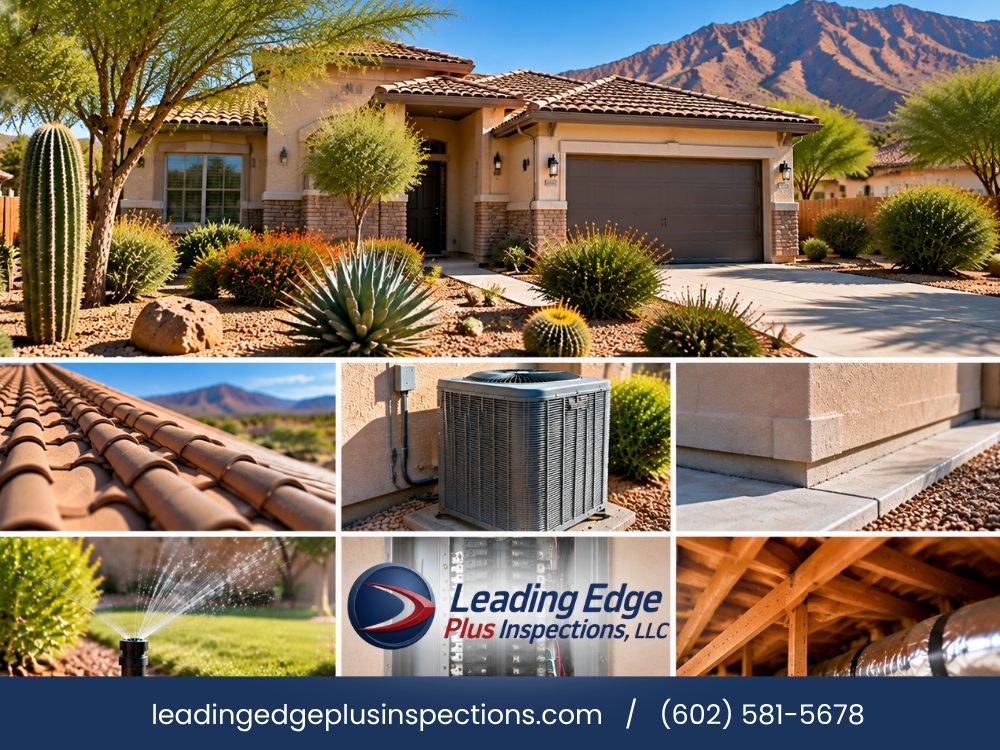
Every October, the East Valley fills back up. Seasonal residents return, relocating families arrive ahead of the winter, and a steady share of the buyers touring homes in Gilbert, Chandler and Queen Creek are looking at Arizona houses for the first time in their lives.
If that is you, here is the single most useful thing to understand before your inspection: desert homes do not fail the way homes fail where you are coming from.
The inspection report you are about to read will not look like the ones your friends back home describe. Different systems, different materials, different failure modes. Knowing what actually matters here — and what does not — is the difference between a report that informs your decision and one that just worries you.
How Are Arizona Homes Different From What Buyers Expect?
They are built for heat and sun rather than cold and water, and almost every difference follows from that.
Buyers arriving from the Midwest, Northeast or Pacific Northwest are typically surprised by:
- No basement. Most East Valley homes are slab-on-grade. There is no basement to inspect, and the plumbing you would normally see in one is instead run in or under the slab, where it is not visible.
- The roof is a different animal. Tile and flat/foam roofs dominate here, and both behave nothing like the asphalt shingle roof you are used to.
- The AC is the critical system, the way a furnace is critical in Minnesota. Its age and condition genuinely deserve to be a major factor in your decision.
- Soil and irrigation, not rain, drive the water problems. We get very little rain, so almost every moisture issue traces back to irrigation, drainage or plumbing rather than weather.
- Termites are simply present. Subterranean termites are endemic to this Valley. Evidence of past treatment is normal here and is not the alarming discovery it would be elsewhere.
None of this makes an Arizona home a worse buy. It just means your instincts about what to worry about were calibrated somewhere else.
What Should Your Inspection Cover Most Carefully in the East Valley?
The four systems where desert homes actually cost people money.
The roof, and specifically the layer you cannot see. On a tile roof, the tile is not the waterproofing — the underlayment beneath it is, and it has a much shorter life than the tile. A roof that photographs beautifully can be near the end of its service life. On a flat or foam roof, the coating's condition and its recoating history are what matter. Ask specifically about the underlayment or coating, not just whether the roof "looks good."
The HVAC system's age and condition. Systems here work harder than almost anywhere in the country. Get the age, and get an honest read on remaining life. Replacing a system in a Gilbert summer is both expensive and urgent, and it is a very different conversation than replacing a furnace in October back east.
Plumbing in and under the slab. Because supply and drain lines are not visible, an inspector reports on function and on the visible evidence — water pressure, drainage performance, signs of past repair, moisture at the slab edge. If anything suggests a problem under there, that is when a specialist and a specific test are worth the money.
Soil, drainage and the foundation's surroundings. Expansive and collapsible soils exist across the Valley, and the thing that activates them is water — usually irrigation. An inspector should be looking at how water moves around the house, where emitters sit relative to the stem wall, and whether there is evidence of soil movement.
Also worth attention: attic insulation and ventilation, which drive your summer utility bills far more than buyers expect; the water heater's age and installation; and evidence of termite activity or prior treatment.
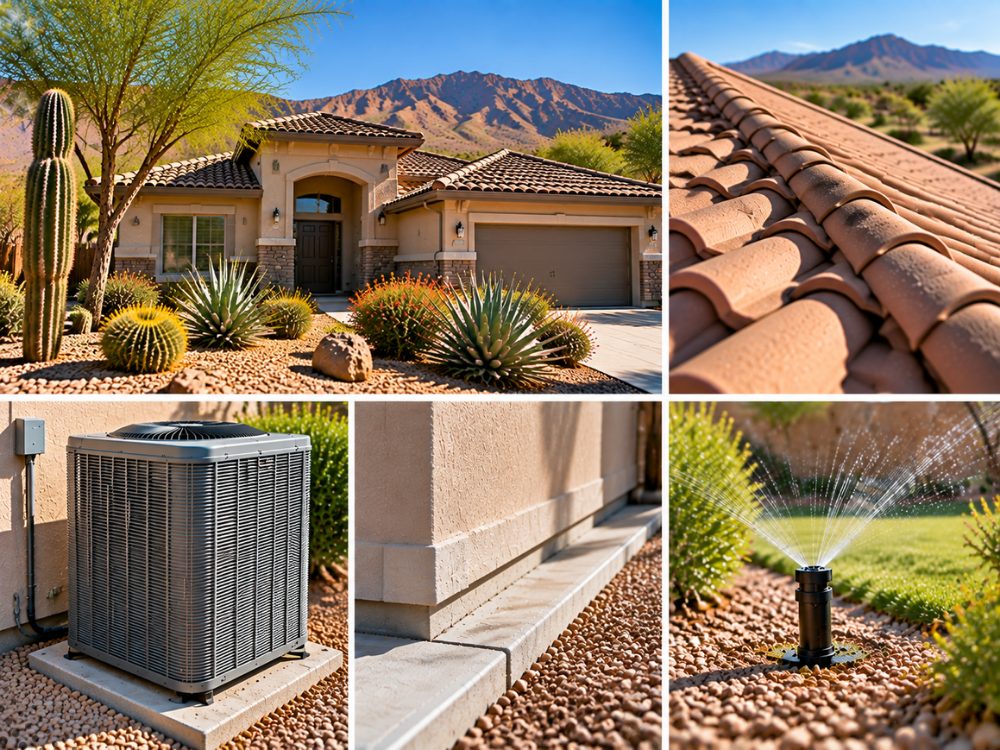
How Should a Remote Buyer Actually Use the Inspection?
Treat it as your eyes, and set it up so it works that way.
If you cannot be here in person, a few things make a large difference:
- Attend by phone or video if you can. Even thirty minutes at the end, walking the significant findings live, is worth more than reading the report cold.
- Ask for a thorough photo record. A good report for a remote buyer should be heavy on images with clear context.
- Ask the inspector to distinguish severity plainly — what is a safety issue, what is a real cost item, what is normal wear, and what is simply how houses are built here. That last category matters enormously for out-of-state buyers, who otherwise flag normal Arizona construction as a defect.
- Ask your questions before the inspection period closes. Call the inspector. A five-minute conversation resolves most of what a report cannot convey in writing.
- Do not skip the inspection on new construction. Much of Queen Creek, San Tan Valley and south Gilbert is new build, and new does not mean flawless. A builder walkthrough is not an independent inspection.
Why Does Using a Local Inspector Matter Here?
Because the failure modes are regional, and so is knowing what is normal.
An inspector who works the East Valley every week knows what a tile roof of a given vintage typically looks like underneath, recognizes which subdivisions were built in which years with which systems, and can tell you the difference between stucco cracking that is ordinary seasonal movement and cracking that indicates soil movement.
That last distinction matters more than almost anything else in this report for an out-of-state buyer. Someone unfamiliar with desert construction can easily read normal as alarming, or read a genuinely significant finding as cosmetic. Both mistakes are expensive — one costs you a house you should have bought, the other costs you a repair you did not see coming.
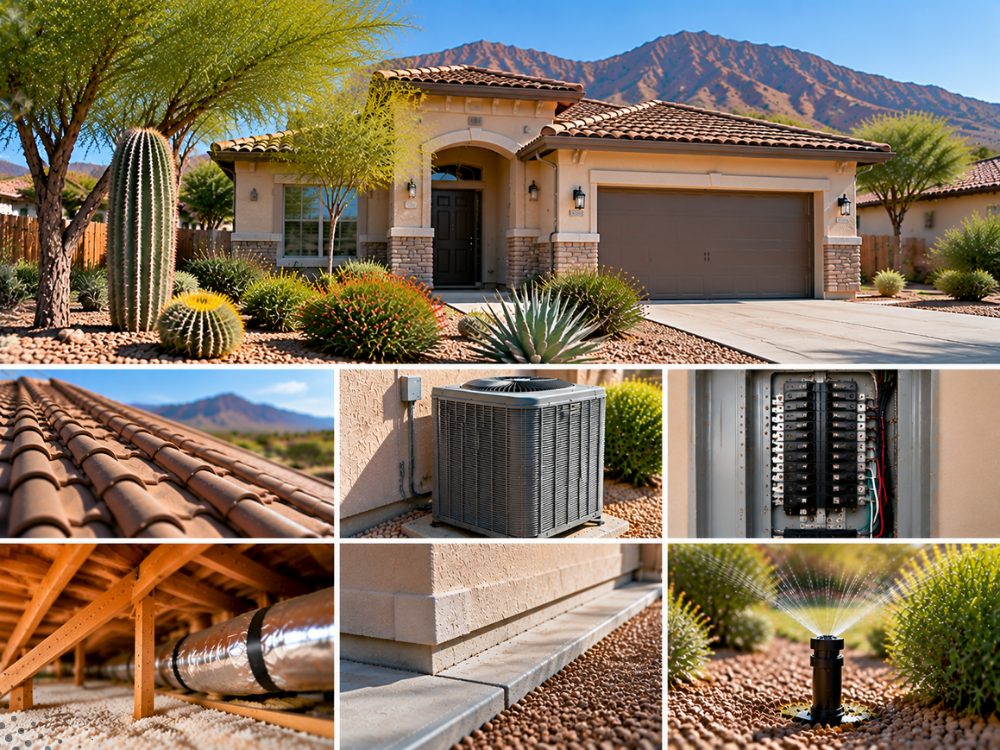
How Do You Schedule an Inspection in Gilbert or the East Valley?
Leading Edge Plus Inspections works throughout Gilbert, Chandler, Mesa, Queen Creek, Tempe and the East Valley, and Kelly Lopez inspects for a lot of buyers who are not yet living in Arizona. The report is written to be read by someone who has never owned a desert home, and Kelly will get on the phone to walk you through it.
If you are under contract or getting close, call (602) 581-5678 or use the contact form on this site to schedule the inspection.
Watch: Buying a Home in Gilbert From Out of State? What Your Inspection Should Cover
Frequently Asked Questions
How are Arizona homes different from what out-of-state buyers expect?
They are built for heat and sun rather than cold and water. Most East Valley homes are slab-on-grade with no basement, so plumbing runs in or under the slab where it is not visible. Tile and flat foam roofs dominate and behave nothing like asphalt shingles. The AC is the critical system rather than a furnace, water problems trace to irrigation and soil rather than rain, and subterranean termites are endemic to the Valley.
What should a home inspection cover most carefully in the East Valley?
Four things. The roof's hidden layer — on tile roofs the underlayment is the waterproofing and it fails long before the tile, and on foam roofs the coating and recoating history are what matter. The HVAC system's age and remaining life. Plumbing in and under the slab, which is assessed by function and visible evidence. And soil, drainage and irrigation placement around the foundation.
How should a remote buyer use a home inspection in Gilbert?
Treat it as your eyes. Attend by phone or video even for thirty minutes at the end, ask for a thorough photo record with context, and ask the inspector to plainly distinguish safety issues, real cost items, normal wear, and things that are simply how houses are built in Arizona. Call with questions before the inspection period closes, and never skip an inspection on new construction.
Why does using a local inspector matter in Arizona?
Because failure modes are regional and so is knowing what is normal. An inspector working the East Valley weekly can distinguish stucco cracking that is ordinary seasonal movement from cracking that indicates soil movement, and knows what tile roofs of a given vintage look like underneath. For an out-of-state buyer, misreading normal desert construction as a defect — or a real finding as cosmetic — is expensive either way.
Do you need a home inspection on new construction in Queen Creek or Gilbert?
Yes. Much of Queen Creek, San Tan Valley and south Gilbert is new build, and new does not mean flawless. A builder walkthrough is not an independent inspection — it is conducted by the party who built the home. An independent inspection during the buyer's inspection period gives you a record produced by someone working for you.