
Everywhere else in the country, October is the last comfortable month. Homeowners in Boston and Denver are racing a deadline, trying to finish outside work before the weather shuts it down.
Here in the East Valley, we get the opposite. October is when the door finally opens.
For roughly five months, doing anything on a Gilbert roof was genuinely unsafe. Attic temperatures were somewhere no reasonable person goes. Paint would not cure right, sealant flashed off before it set, and nobody was going to spend a Saturday afternoon out in the yard. Then the mornings drop into the sixties, and suddenly all of it is possible again.
This is our working season. It runs from about now through April, and the list below is what is worth doing at the front of it — while the trades still have availability and before the seasonal residents come back and fill every schedule in the Valley.
What Should You Check Now That the Roof Is Finally Safe to Reach?
Everything the summer did to it — because on an East Valley home, the roof takes more UV punishment than almost any component in any market.
Our sun is relentless, and it degrades roofing materials on a clock. Combine that with a monsoon season that just finished throwing wind, dust and heavy short-duration rain at the house, and October is the honest moment of truth.
Depending on what you have up there:
- Tile roofs. The tile itself lasts a very long time; the underlayment beneath it does not. That is the part that actually keeps water out, and it is the part that fails. Look for slipped, cracked or broken tiles, and understand that a tile roof that looks perfect can still have underlayment near the end of its life.
- Flat and low-slope roofs. Extremely common here. Check the coating for chalking, crazing, blistering and ponding areas that never drain. Foam roofs need recoating on a schedule — missing that schedule is expensive.
- Shingle roofs. Granule loss, curling, and tabs lifted by monsoon wind.
- Every penetration. Vent boots, the AC curb and its flashing, skylights, and anywhere a plumbing vent comes through. Cracked, hardened boot collars are one of the most common findings in this market — UV destroys them.
- The parapet walls and scuppers, if you have them, plus the drainage path off the roof.
Then look in the attic with a flashlight. Staining on the sheathing, rust on nail shanks, or displaced insulation all mean water found a way in during monsoon and nobody noticed.
What Changes on Your AC When the Season Turns?
It stops being the hardest-working appliance in your house and starts, for a few months, being a heater — and most East Valley homeowners never test that until they need it.
Most homes here run a heat pump or a gas-pack, and the heating side sits completely unused from roughly March to November. The first genuinely cold morning in Gilbert is when everybody finds out at once whether it works.
- Run the heat for twenty minutes on a mild day. A brief burning smell is dust on the elements and is normal. Anything more than that, or no heat at all, is a service call you would much rather make in October.
- Change the filter. After a full summer of continuous run time plus monsoon dust, it is worse than you think.
- Look at the condenser unit now that summer is over. Dust and debris packed into the coil fins, bent fins, and vegetation crowding the unit all reduce efficiency and shorten its life.
- Check the condensate drain and the emergency pan at the air handler, and the line set insulation where it runs outside — UV shreds it.
- Test every smoke and carbon monoxide alarm. If you have gas heat, gas water heater, gas range or an attached garage, this matters.
Worth knowing: a system that struggled through this past summer will struggle worse next summer. October is the right month to get an honest opinion about a system nearing the end, rather than in July when every HVAC company in the Valley is triaging emergencies.
Why Does the Irrigation Clock Matter So Much Right Now?
Because in the desert your irrigation controller is the main source of water on your property, and running a summer schedule into the cool season is one of the most common — and most damaging — mistakes homeowners here make.
Once the temperatures drop, plants need dramatically less water. If the clock does not change, you are pushing summer volumes of water into the ground all winter. That water goes somewhere, and often it goes toward the house.
- Change the controller to the cool-season schedule — less frequently, longer soak, adjusted for what is actually planted.
- Walk the drip lines and check every emitter. Clogged emitters starve plants; blown emitters and cracked poly line dump water in one spot, and in the desert that is how you get soil movement against a foundation.
- Look at where the water is actually going. Any emitter or spray head watering within a few feet of the slab, or soaking the stem wall, needs to be moved. Persistent moisture at the foundation is a real structural concern in this soil, and it is also how you invite termites in.
- Check the backflow preventer before the first cold snap. We do get freezing nights here, and an exposed backflow assembly is the thing that splits.
- Watch a full cycle at least once. It is the only way to catch a head that has been spraying the stucco for months.
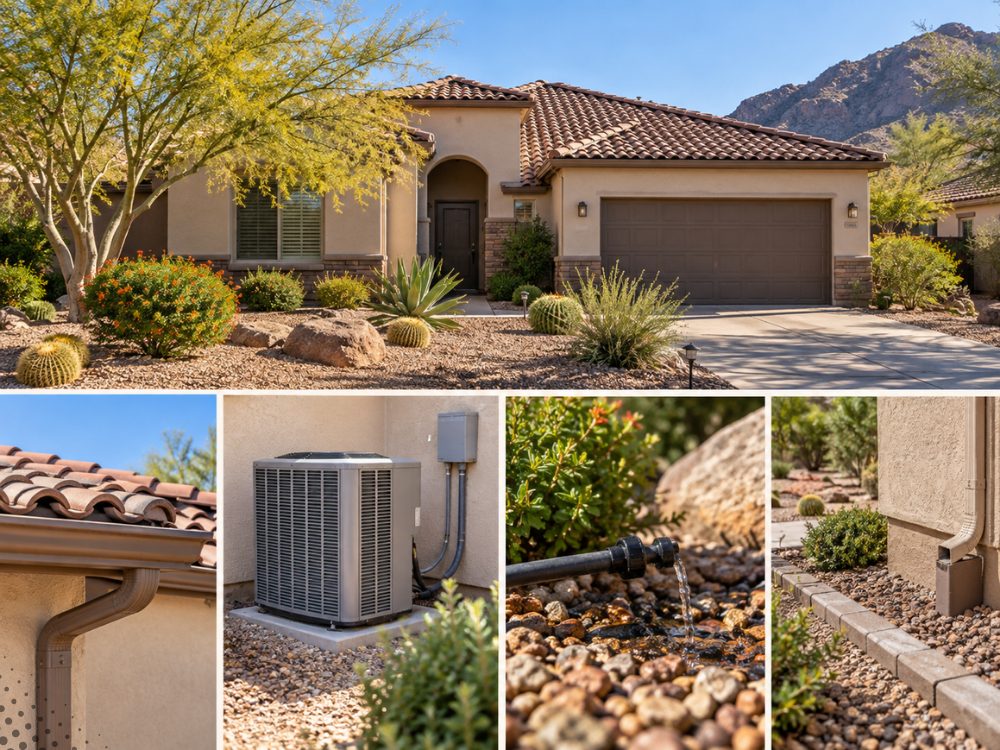
What Else Is Worth Doing at the Front of the Working Season?
The exterior work you have been putting off since April, while the weather still cooperates and the trades still have room.
- Exterior paint and stucco repair. Now through spring is when it cures properly. Look for hairline stucco cracking, spalling at the base, and separation at windows and doors — our seasonal movement opens these up steadily.
- Seal the block wall and any exposed masonry.
- Weatherstripping and door sweeps. These matter here for the same reason they matter in cold climates, just inverted — they are what keeps your conditioned air in and next summer's heat out.
- Dryer vent cleaning. A genuine fire item and consistently neglected.
- Water heater. Check the age, look at the TPR valve and its discharge line, and confirm it is properly strapped.
- Termite awareness. Subterranean termites are a permanent fact of life in this Valley, not a seasonal one. Look at the stem wall for mud tubes, especially anywhere irrigation keeps the soil damp.
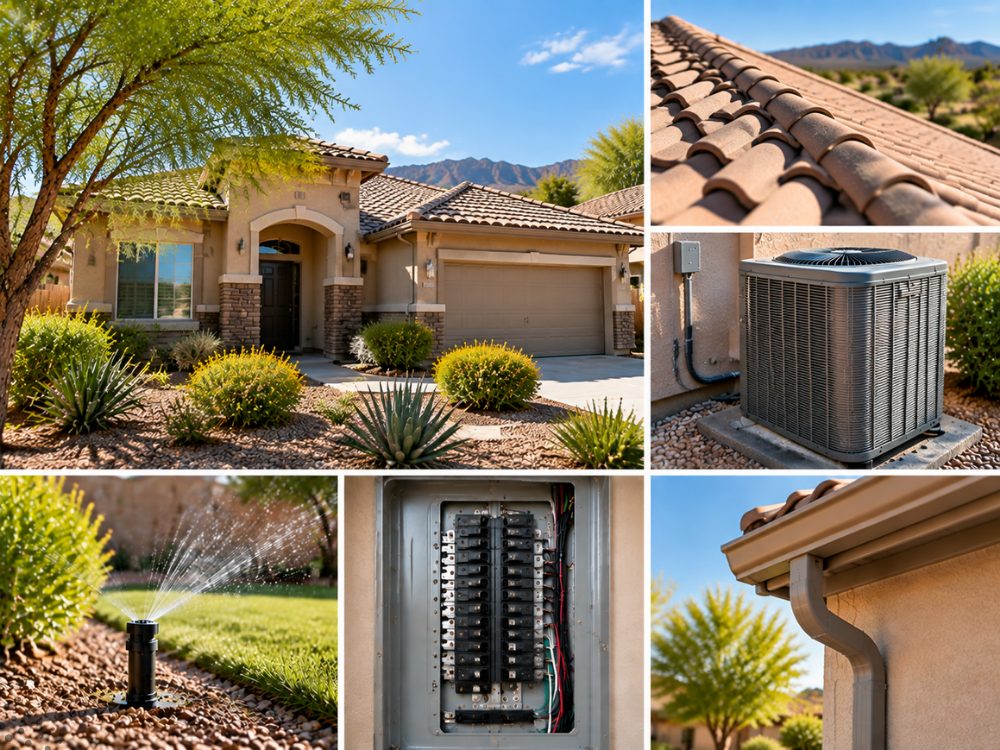
Is It Worth Having Someone Walk the House?
For many East Valley homeowners, yes — particularly if you have been in the house several years and nobody has been on the roof or in the attic since you bought it.
That is more common here than people expect, because our houses do not complain. A desert home can carry a failing roof underlayment, a struggling AC and a slow irrigation leak at the foundation without giving you a single obvious symptom, right up until it becomes expensive.
A maintenance inspection is not a real estate transaction. Nothing is being negotiated. It is a walkthrough of the roof, attic, structure, plumbing, electrical, HVAC, and the drainage and soil conditions around the foundation, with a written record of what is fine, what to watch, and what to handle while the working season is open.
If you would like someone to walk the house at the front of the season, Leading Edge Plus Inspections works throughout Gilbert, Chandler, Mesa, Queen Creek and the East Valley. Call Kelly at (602) 581-5678, or use the contact form on this site, and we will find a morning that works.
Watch: Gilbert AZ October Home Maintenance Checklist
Frequently Asked Questions
What should Gilbert homeowners check now that the roof is safe to reach?
Everything the summer did to it. On tile roofs the tile lasts but the underlayment beneath it is what actually keeps water out and what fails — a tile roof that looks perfect can still have underlayment near the end of its life. On flat and foam roofs check for chalking, blistering and ponding, and confirm the recoating schedule. On every roof, inspect vent boot collars, which UV destroys, then check the attic for staining and rust on nail shanks.
What changes on an Arizona AC system when the season turns?
The heating side, which has sat unused since roughly March, becomes the system you depend on. Run the heat for twenty minutes on a mild day rather than discovering a problem on the first cold morning. Change the filter after a full summer of run time, clear dust and vegetation from the condenser, check the condensate drain and pan, and test every smoke and carbon monoxide alarm.
Why does the irrigation timer matter so much in the East Valley in fall?
In the desert the irrigation controller is the main source of water on the property, and running a summer schedule into the cool season pushes far more water into the ground than plants need — often toward the house. Change to a cool-season schedule, check every emitter for clogs and breaks, move any emitter watering within a few feet of the slab, and check the backflow preventer before the first cold night.
What exterior work is best done at the front of the Arizona working season?
Exterior paint and stucco repair, which cure properly from now through spring; sealing block walls and exposed masonry; weatherstripping and door sweeps, which keep next summer's heat out; dryer vent cleaning; checking the water heater's age, TPR discharge line and strapping; and inspecting the stem wall for termite mud tubes, especially where irrigation keeps soil damp.
Is a maintenance inspection worth it for an East Valley homeowner?
It often is, particularly for owners who have been in the house several years without anyone on the roof or in the attic. Desert homes rarely give obvious symptoms — a failing roof underlayment, a struggling AC and a slow irrigation leak at the foundation can all progress silently until they become expensive. A maintenance inspection produces a written record while the working season is still open.